Your First Solo Trip: A Planning and Safety Checklist

TL;DR: A first solo trip goes better when the boring stuff is sorted before you leave. Check the entry rules for your destination, read your government’s travel advisory, enroll in the free STEP program (US citizens), tell one person where you will be, know what your insurance does and does not cover, carry a backup way to pay, and plan your first night so you are not wandering with a dead phone. None of it takes long, and all of it is easier from your couch than from a foreign airport.
Key takeaways
- Check entry requirements for your specific destination early. Rules differ by country and change.
- US travel advisories use four levels, from “Exercise normal caution” to “Do not travel,” and STEP is a free way to get embassy alerts.
- Leave copies of your documents and your itinerary with someone you trust, and agree on how often you will check in.
- Your regular health plan may not cover care abroad, and many policies exclude things you would assume are covered. Read the exclusions.
- Most travel scams share the same tells: pressure, vague details, and payment you cannot get back.
Start with documents, not the playlist
Everything else depends on whether you are actually allowed in. Entry rules are set by the country you are visiting, not by your home country, so they vary: some want a visa, some want extra validity on your passport, some want proof of onward travel. The US State Department publishes a country information page for each destination, which is the place to start. Confirm on that country’s official government or embassy site too, because rules change.
Do this before you book anything non-refundable. A cheap flight is not a deal if your passport does not meet the entry rules.
Be careful what you search, too. The FTC warns about copycat sites that charge steep fees for passport, visa or permit services that official government sites offer for less or free.
Copies: boring, useful, free
Both the CDC and its Yellow Book guidance suggest leaving copies of your passport, visas, itinerary and cards with someone at home. If your bag disappears, that person can read you the details you need. Keep a second set somewhere you can reach even if your phone goes missing.
Read the advisory, then enroll in STEP
If you are a US citizen, the State Department rates each country with a travel advisory. As of November 2026, USAGov describes four levels.
| Level | Name | What it signals |
|---|---|---|
| 1 | Exercise normal caution | Lowest level of concern |
| 2 | Exercise increased caution | More risk to be aware of |
| 3 | Reconsider travel | Serious risks |
| 4 | Do not travel | Life-threatening risks; the government may be unable to help in an emergency |
Levels are set country by country and can change, so check the live page for your destination close to departure.
STEP is the Smart Traveler Enrollment Program, a free State Department service. According to USAGov, you give your name, date of birth, passport number and an emergency contact, then pick your destination country. In return you get emails with news, alerts and advisory updates for that country, the local embassy can give you instructions in an emergency, and the embassy can help family and friends reach you. USAGov also says enrolling can speed up reporting a lost passport and getting a temporary one.
It does not replace judgment, but it costs nothing. Update your destination if plans change.
Share the plan with one person
Traveling solo means nobody notices if you go quiet. The CDC Yellow Book points out that travelers may not have a network of friends or family nearby to help in an emergency, and recommends sharing your itinerary and setting expectations for check-ins.
Pick one or two people. Send them where you are staying, your flight details and rough plans. Agree on a rhythm, such as a short message each evening, and what they should do if they hear nothing. The CDC also says to carry your own emergency contacts at all times, so write them down outside your phone.
Travel insurance: what to ask before you buy
Insurance is not exciting, but a medical bill or a cancelled flight is a lot less exciting. The National Association of Insurance Commissioners (NAIC), which represents state insurance regulators, lays out the basics:
- Trip cancellation, interruption and delay reimburses prepaid, nonrefundable costs in covered situations, such as a serious illness or a delay that forces an overnight stay.
- Travel medical is there because standard health plans, including Medicare, often do not cover care abroad. It works as secondary coverage.
- Medical evacuation covers emergency transport to a licensed facility. The NAIC says most US health insurers will not pay for overseas transport or repatriation.
- Cancel for any reason (CFAR) returns part of the trip cost, typically 50% to 75%, for reasons standard coverage does not accept. It usually has to be bought within a set window, insures the full trip cost, and can add roughly 50% to the price of the insurance.
The NAIC says policies commonly cost around 5% to 10% of the trip price, depending on factors like season, destination and age. Common exclusions include pre-existing conditions, pandemics, civil unrest and risky activities such as bungee jumping. So if your plan includes anything adventurous, check the wording before assuming you are covered.
Some credit cards and other policies already cover certain baggage losses, so check for overlap. Cancellation fee waivers and assistance services bundled with a booking are often not insurance and are not overseen by state insurance departments. The FTC adds that you should confirm an agency is licensed. For your own situation, ask a licensed insurance professional.
Money: two ways to pay, kept apart
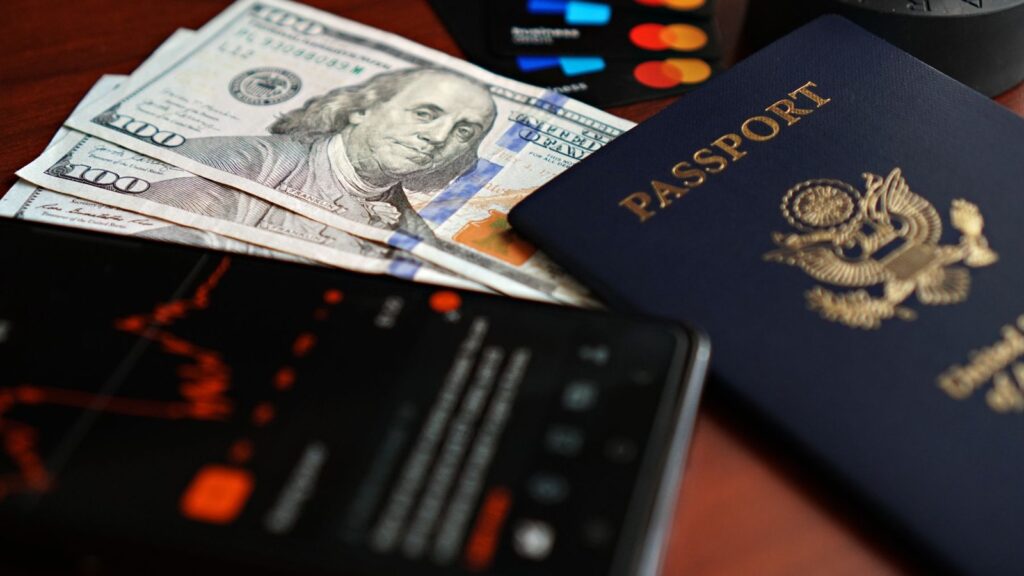
Avoid a single point of failure. Bring at least two payment methods and store them in different places, so a lost or frozen card does not strand you. Note your bank’s contact details somewhere other than your phone. Carry a little local cash for the first day. The CDC’s safety guidance also suggests not carrying expensive items, and handing over valuables rather than resisting if you are robbed.
Plan the first night properly
Arrival is when you are most tired and least oriented, so decide the boring things in advance:
- Book at least the first night, and save the address in a way that works offline, plus a screenshot of the booking.
- Work out how you will get from the airport or station to your bed, and use transport recommended for that place. The CDC advises sticking to safe local transportation.
- Try to arrive in daylight. The CDC says to limit travel at night and to go with a companion when possible.
- Charge your phone before landing.
- If you can choose, skip ground-floor rooms and rooms next to stairs, as the CDC suggests, and lock up.
- Message your check-in person once you are inside.
Scams: spot the pattern, take the safe action
You do not need to be paranoid. The FTC’s travel guide boils most scams down to a few patterns, and the safe action is usually just “slow down and verify.”
| Pattern | Warning sign | Safe action |
|---|---|---|
| “Free” trip | You must pay fees first | Walk away; real prizes do not charge |
| Rental or hotel deal | Price far below similar places; vague address | Confirm the address exists and call the property |
| Fake visa or permit site | High fees for a service governments offer | Go directly to the official government site |
| Pushy booking | “Decide now”; no written terms | Get cancellation terms in writing first |
Across the board, the FTC says never to pay with a wire transfer, gift card or cryptocurrency, because you are unlikely to get it back. It also recommends searching the company name with words like “scam” or “complaint,” and reporting suspected scams at ReportFraud.ftc.gov and to your state attorney general.
The in-person tricks vary a lot by city. The CDC points travelers to the State Department country pages, which list typical scams and crimes for each destination. Read the one for your destination before you fly.
The pre-departure checklist
- Entry requirements for your destination confirmed on an official source.
- Travel advisory read, and STEP enrollment done (US citizens).
- Copies of passport, visas, cards and itinerary left with someone at home.
- Itinerary and check-in plan shared with one or two people.
- Insurance reviewed: medical, evacuation, cancellation, exclusions.
- Two payment methods stored separately, plus a little local cash.
- First night booked, address saved offline, route from the airport planned.
- Emergency contacts written down outside your phone.
Frequently asked questions
Is STEP only for people going to risky countries?
No. USAGov describes it as a free service for US citizens traveling in another country, and you pick the destination whatever its advisory level. It is mostly about getting alerts and making it easier for the embassy and your family to reach you.
Does a Level 4 advisory mean I legally cannot go?
The level is guidance on risk, not a legal ban. Level 4 means the government sees life-threatening risks and may be unable to help in an emergency. Insurance policies often exclude civil unrest, so read yours.
Do I really need travel insurance for a short trip?
That depends on your health coverage, what you have prepaid, and what you can afford to lose. The NAIC notes that standard health plans often do not cover care abroad, so it is worth at least checking. A licensed insurance professional can help with specifics.
What should I do if I think I have been scammed on a trip?
Stop paying, contact your bank or card issuer using the number on your card, keep records, and report it to ReportFraud.ftc.gov and your state attorney general, as the FTC suggests. If you are in physical danger, contact local emergency services first.
Before you decide
You do not have to do every item perfectly. If you only do three, make them these: confirm entry rules, share your itinerary, and understand your medical coverage. Rules, advisory levels and policy terms change, so recheck shortly before you go. Nobody is grading your itinerary.
Sources
- See travel advisories and register in STEP, USAGov
- Travel Insurance, National Association of Insurance Commissioners
- Survival Guide to Safe and Healthy Travel, Travelers’ Health, CDC
- Safety and Security Overseas, CDC Yellow Book
- Avoid Scams When You Travel, Federal Trade Commission
Last updated: November 2026. This article is general information, not travel or safety advice.